

$104bn in a quarter; the shares fell anyway
Two central banks held, as expected. Two Korean memory makers earned $104bn between them in a single quarter and watched their shares fall anyway. And BP began the sale of its North Sea business.
First published in Noise Cancelling

As expected, this week has been especially busy, both in terms of important macro data and company results. It has also featured yet another pause in the conflict in the Gulf, then further exchanges of fire, then another pause, with commensurate oil price volatility. And talking of volatility, what is going on in the semiconductor sector is quite extraordinary. After several weeks of share price weakness since the middle of June, the sector has taken off in the last twenty-four hours, with Micron up 18% in the US yesterday and SK Hynix, after falling more than 50% since the peak on 22 June, up 25% today. This sort of extraordinary volatility would be remarkable in the small and mid-cap sectors of the market, but I have never seen anything like it in companies that have very recently had trillion-dollar market values.
I have never seen anything like it in companies that have very recently had trillion-dollar market values.
The Gulf, and an oil price that refuses to behave
If I start with the war in the Gulf and the oil price, as I have already said it has been quite a volatile week, which has been reflected in the price of crude. After breaching $100 just over a week ago, the price is now back down to $87 after another pause in the fighting, and interestingly all the headlines about the Middle East today are focused on the disarmament deal with Hamas in Gaza. Clearly the situation is fragile, to say the least, but what is increasingly clear is that neither side appears to want to revert to full-scale conflict, which I believe is why the oil price still remains well below where most commentators have suggested it should trade given the conflict's ongoing impact on shipping through the Strait of Hormuz.
Two holds, and one disagreement I still cannot follow
The uncertainty about the war's duration and impact on energy prices featured prominently in the commentary accompanying the Fed's and the Bank of England's interest rate decisions this week. In both cases the rate-setting committees decided to hold rates, which is what I expected. The decision in the US might be the more surprising, given the higher inflation rate there, the relatively robust labour market and the stronger economy – albeit that growth in Q2, which was also released this week, of 1.5% was some way below the expected 2.1%. As for the MPC's hold decision, I wrote in some detail about it yesterday, but in summary: with inflation down at 2.6%, and predicted to be in line with their target by the middle of next year, along with a pretty downbeat assessment of the growth outlook (with which I disagree), I have argued that there is a strong case for rate cuts, not the increases that three members of the committee voted for.

Despite their unfathomable perspective, I still believe that the next move in UK interest rates is a cut, which might come as early as the back end of this year. Of course, that depends on some normality returning to the energy market and the oil price, which was below $72 at the start of July. But if some kind of peace can be maintained between the US and Iran, then a return to that level should, in my world, be consistent with lower inflation by the year end and a return to 2% in the first half of next year.
Memory: the most extraordinary numbers I have seen
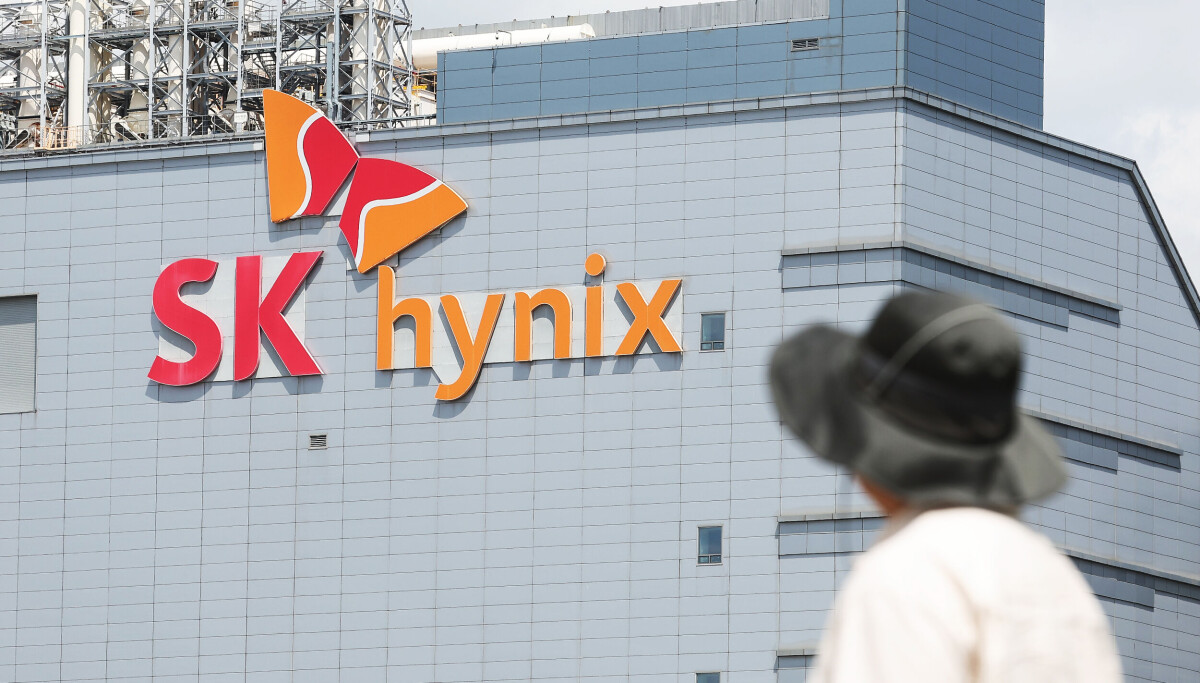
Before covering one or two things that stood out for me among the ridiculous number of companies that have reported this week, I just wanted to comment on what is going on in the semiconductor sector, because it really is unprecedented. In recent days both Samsung and SK Hynix announced their June-quarter results, which quite simply were blow-outs. These two Korean companies' revenues make up about 80% of the memory market, and in the June quarter alone they generated a hard-to-believe $104bn in combined operating profit, driven almost entirely by demand from the unfolding AI industrial revolution for advanced memory and storage chips. For the full year, Hynix is forecast to make more in profits than it has made in its entire 27-year existence. Despite these incredible results, both companies' share prices, and Micron's – the other player in this market – saw steep declines in recent weeks. Until today, that is, when sentiment changed and all three reversed engines.
The Mag 7: pigeons and statues
Among the high-profile Mag 7, the results have been mixed. Tesla missed its numbers, and investors took fright at Alphabet's higher AI capex and cashflow, despite the fact that profits were above expectations. Amazon's numbers looked excellent to me, and especially in its cloud services division. Its share price responded positively. Probably best of all was Microsoft's numbers, which also featured very strong growth in its cloud services business of 43%. It added a spectacular $450bn to its market cap yesterday alone – the equivalent of two Shells, the UK's third biggest company, in one day.
Underlying this madness are two opposing forces. On the one hand are concerns about circular financing and the giant investment spend all of these companies are lavishing on their AI ambitions, including questions about how long it can be sustained, whether it will deliver an acceptable return and, most fundamentally, whether the open-source (open-weight) Chinese models being developed at a fraction of the spend in the US will undermine the economics of the leading US AI companies. The bulls, on the other hand, are focused on the implications of this vast investment for the suppliers to the model developers and cloud service businesses, the rapid growth in cloud service revenues and the promise of higher returns in the future. As the saying goes, on some days investors in this sector are the pigeons and on others they are the statues.
On some days investors in this sector are the pigeons and on others they are the statues.
BP starts selling out of the North Sea
Although BP has yet to announce its Q2 results – they are out next week – the company made an announcement today which appears to have attracted virtually no attention but which I think is significant. In summary, the company has announced that it has started a process to sell its North Sea business, which is expected to achieve something like £2bn. Although other major oil companies have already left, including Chevron and ConocoPhillips, and Total and Shell have combined their operations with other operators, this is a very symbolic move. It once again shines a light on Britain's self-destructive, unfathomably stupid energy policy, which through a combination of ridiculously punitive taxation and bans on new drilling has made the entire basin uneconomic. This should serve as yet another wake-up call to the new PM, but so far it is not clear that he is listening. Although I suspect the newly appointed energy secretary will see this announcement as some kind of bizarre triumph for the climate, just as her predecessor might have done, to others it should serve as a reminder that the UK economy is becoming even more dependent on energy imports from other countries drilling for oil and gas in exactly the same basin.

It once again shines a light on Britain's self-destructive, unfathomably stupid energy policy.
They must think we have gone stark raving mad.
What the banks are telling us about the economy
Finally, to the UK banks sector, most of which has reported interim results this week. One of the reasons I tend to focus on these numbers is that they provide a helpful and contemporaneous insight into what is happening in the UK economy, as much as they are a reflection of the performance of the underlying businesses. Barclays kicked the results season off with very good numbers, which were followed by Lloyds and Standard Chartered, which were also excellent. But it is NatWest's numbers, released today, that I wanted to focus on. Aside from the fact that the numbers were very good, guidance for the full year was increased and the buyback will be initiated earlier than expected, it was the chief executive's commentary that attracted my attention. In an interview with Bloomberg TV this morning he said that "we see really good demand in the economy. You can see that in our lending growth in our corporate bank – a significant increase in the first half of the year." Later he added that the retail and wealth businesses were also growing. Among the formalised but vague waffle so characteristic of chief executive statements these days, I thought these words were quite telling, and reflective of a rather more upbeat economic backdrop in the UK than many might have assumed. I was quite encouraged by this, and by some of the other commentary I have heard this week.

The exception: homes that are not being built
On the other hand, the travails confronting the housebuilders were also on display in Taylor Wimpey's numbers, released today. Perhaps of most relevance to the PM might be the fact that the company, which is the UK's second largest volume builder, completed just over 5% fewer homes – at 4,986 – in this first half than in the same period last year. The fact that in 2021 it completed around 7,300 homes in the same period tells you all you need to know about the reality of the sector right now, which is being hampered by high interest rates, build cost inflation and the costs of excessive regulation. If only Angela Rayner and Mr Burnham were paying attention.
Fewer homes, five years on
What to look out for next week
It looks like being a quiet week for macro data in the UK, but not so in the US, which will be releasing a lot of labour market data. As for the results season, it remains very busy next week, but maybe not quite as hectic as this one. Finally, one can only hope that the relative calm that appears to have broken out in the Gulf in the last 24 hours continues. We will see.
Important information
The views expressed in this article are those of the author at the date of publication and not necessarily those of Curated Capital Ltd. The contents of this article are not intended as investment advice and will not be updated after publication unless otherwise stated.