

A mañana Budget, but no Truss moment
Andy Haldane is right that this government won’t cut spending, and right that it should. Where I part company with him is on gilts: yields are high because of where the Fed and the Bank of England set rates, not because the market has lost faith in the UK.
First published in Noise Cancelling

I suspect Mr Healey’s Budget speech is already written (for him, not by him), but that hasn’t stopped several well-qualified pundits from offering the Chancellor some last-minute advice.
Thankfully, this year we haven’t had to endure months of speculation about black holes or how much taxes might need to rise to fill them, and so the lead-up to this year’s event has been relatively muted. But there was one intervention which attracted my attention, and that was from the ex-chief economist at the Bank of England, Andy Haldane, who also informally advised Mr Burnham when he was Greater Manchester’s mayor.
Andy is rightly highly regarded by the economic establishment, so people tend to pay attention when he comments on public policy. Some weeks ago, he said the critical weakness of this government has been its unwillingness or inability to cut public spending, and he added that it is now seen as a traditional tax-and-spend Labour government, but with a better social media presence.
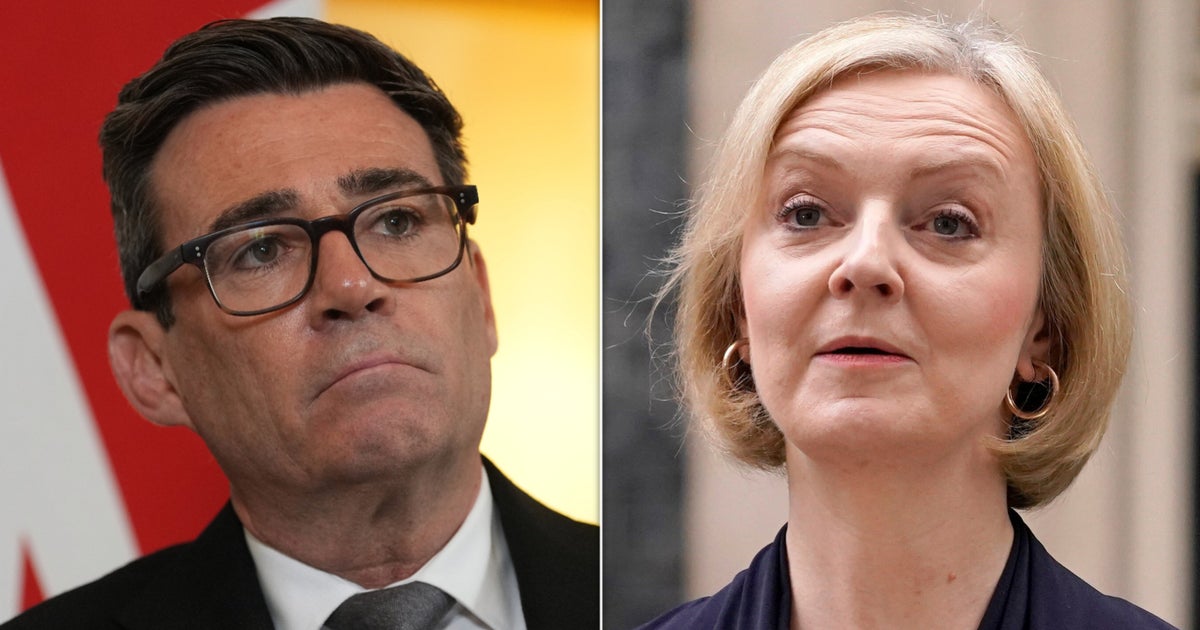
I said at the time that I could not agree more, and he has now followed up those comments by saying that the government should not avoid tough decisions in relation to public spending, which he said it should confront head-on this week but which I suspect, as does he, that it will completely duck in what he called a “mañana” Budget. He went on to add that there was an increasing risk of a “Liz Truss-style crisis” if these hard economic decisions were put off.
Bad policy, but no crisis
Whilst I think this is very sage advice which Mr Burnham and his deeply unimpressive Chancellor would do well to pay heed to, I do not share this perspective entirely and thought that I should once again explain why.
Clearly, this government, like its many predecessors, has an infantile approach to public spending, driven by the flawed belief that redistributive economic and social policies are costless and that the solutions to all of the economy’s challenges are, very simply, a bigger and more bloated public sector. They cling to this semi-religious doctrine regardless of the many lessons of economic history that demonstrate its manifest failures, and plough on regardless in a fog of Einsteinian madness, hoping that despite those lessons, this time a different outcome will emerge.
They will of course be wrong, but despite the damage that these policies will inevitably inflict on the economy, I do not think that they will undermine its growth momentum. Equally, although I completely agree with Andy Haldane that this government should be very conscious of the limits of financial markets’ willingness to fund its fantasies, I do not think we are close to what he describes as a “Liz Truss-style crisis”.
What is driving gilt yields
Gilt yields are elevated, and I can see why there is a widespread belief that these yields are indicative of stress in the market, but my diagnosis is subtly but importantly different.
In my view, elevated gilt yields are a direct product of their long-held relationship with base rates and US ten-year yields, which of course, in turn, are the product of where the Fed sets interest rates. These official rates, and the government bond yields that are driven by them, reflect where inflation is now and what its expected future path is.
As I have pointed out in previous NC research pieces, when Fed funds is at 4%, history says one should expect ten-year Treasury yields to be very close to 5.3%, and given the close relationship between Treasury and gilt yields of the same duration, one should expect the equivalent gilt to yield something close to 5.7%. In fact, the ten-year Treasury yield today is 4.99% and the equivalent gilt yields 5.34%.
Fed funds at 4% puts the ten-year at about 5.3%
Gilts have followed Treasuries for forty years
A thought experiment
A thought experiment might help to shed some light on why I disagree with the current “stress” consensus view.
Imagine for a moment that the Chancellor, in a surprise announcement on Wednesday, cut government spending by £20bn and, correspondingly, the deficit from about £115bn to £95bn – or about 0.6% of GDP.
I presume that those who believe issuance stress is causing elevated gilt yields would assume that the relief would lead to an immediate rally in the market and lower yields across the maturity spectrum. However, I would argue that although the surprise would be welcome and probably lead to a good day or even days in the market, given that inflation hasn’t changed and neither have base rates (these are expected to increase early in November) or Treasury yields, the shift in gilt yields would not be that significant. I can’t prove it, but I am confident that this is what would play out.
Deficits and yields, year by year
The ten-year gilt yield moves with near-term rate expectations
France shows where it could lead
Having said this, I do not underestimate the risks of getting to the point where the market becomes stressed and begins to lose faith in the government’s fiscal “prudence”.
We only have to look across the Channel at what’s happening in France to know where this might lead. So, I am not advocating anything other than fiscal probity, and I am sure that over time, if we had a government that was capable of living within its means, that would eventually lead to a lower yield payoff, but this would take years in my view and would require markets to believe that UK debt should trade at a yield discount to US Treasuries.
It’s possible, but not under this government.

Important information
The views expressed in this article are those of the author at the date of publication and not necessarily those of Curated Capital Ltd. The contents of this article are not intended as investment advice and will not be updated after publication unless otherwise stated.