

Fool me once: Miliband's Jackdaw U-turn
Ed Miliband called new North Sea drilling "climate vandalism". Now, with the chancellorship under Andy Burnham in sight, he is reported to be ready to wave the Jackdaw gas field through. What the U-turn reveals about the policy that gave Britain the dearest industrial electricity in the developed world.
First published in Noise Cancelling

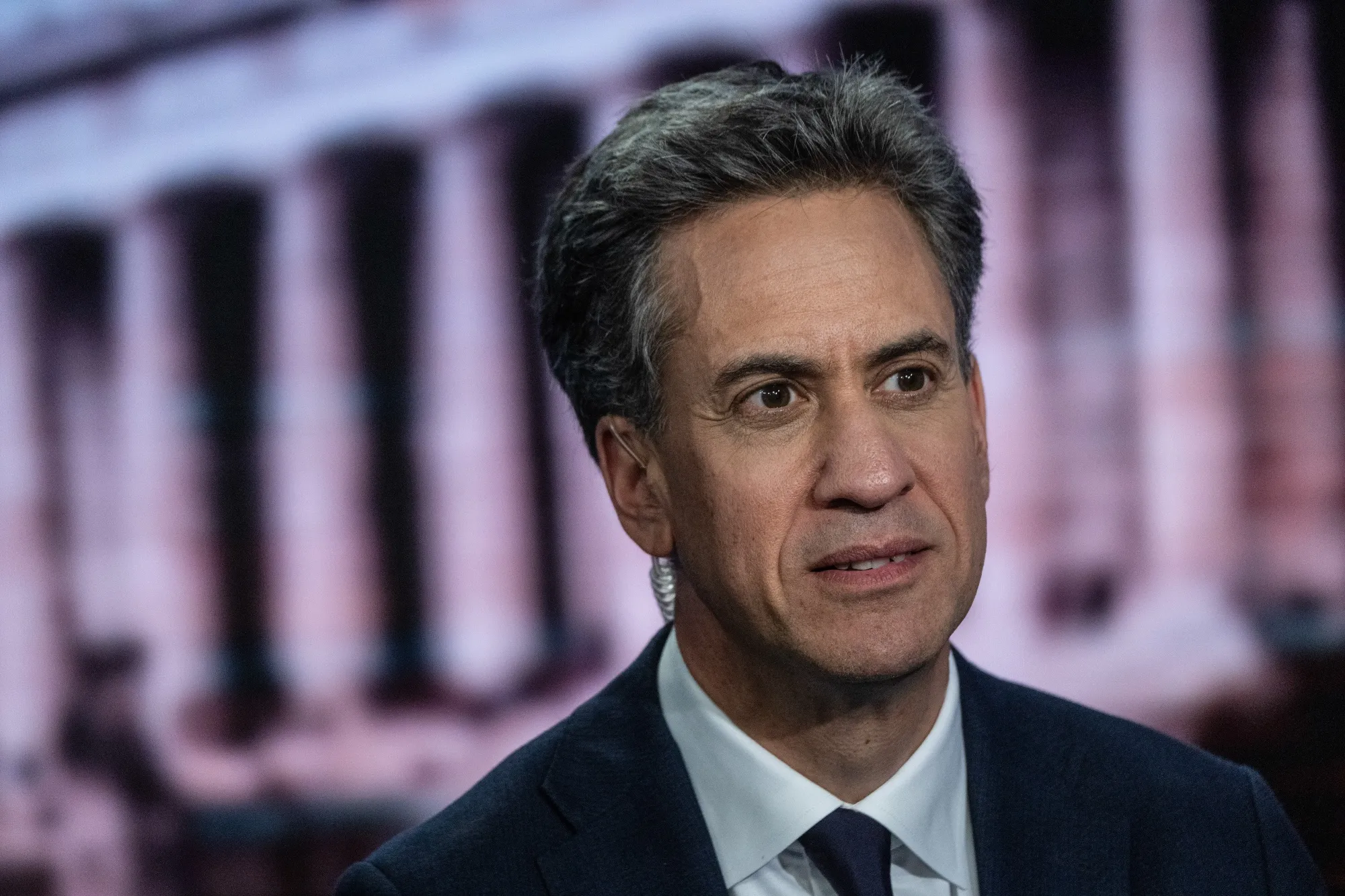
I expect, like most folk, I am inclined to want to see the best in people, even in politicians with whom I disagree. I was reminded of this fundamental characteristic of civil, democratic society when I read this week about Ed Miliband's desire to become Andy Burnham's chancellor, and the price he appears willing to pay for it.
Fool me once, shame on you; fool me twice, shame on me.
I have been consistently critical of Mr Miliband's net zero zealotry, principally because it made no sense to me on economic or environmental grounds. His refusal to allow the exploitation of the UK’s abundant energy resources and his unilateral, accelerated drive to net zero were quite clearly very damaging to the UK economy but of absolutely no benefit to the ambition of limiting man-made climate change.
Simply put, his policies and those of his predecessors have delivered the highest industrial electricity prices in the developed world and the second-highest residential prices. The government's own numbers make the case. In 2024, UK industry paid 26.63p per kWh for electricity: the highest of the 25 IEA countries reporting data, 63% above the IEA median and roughly three and a half times the Canadian price. UK households paid 30.45p per kWh, second only to Germany.
Same fuel, different bill
The standard defence is that this is the fault of international gas prices, and therefore of Putin. The same dataset disproves that argument. UK industrial gas in 2024 cost 5.77p per kWh, slightly below the IEA median. We pay a middling price for the fuel and the highest price in the developed world for the electricity. The gap between those two numbers is not gas. It is policy.
The gap is policy, not fuel
These prohibitive costs have undermined the UK industry's competitive position and imposed unnecessary burdens on hard-pressed households. The ONS calculates that output in energy-intensive manufacturing has fallen by a third since the start of 2021, to its lowest level since its records began in 1990. Set against the government's apparent principal focus of delivering economic growth and helping "ordinary working families", it is impossible to see how these things are at all aligned.
Where the benefit went
Instead of helping the UK economy, the government's energy policies have benefited the economies from whom we import gas and electricity (Norway, France and the US, for example) and those who export goods to us that used to be manufactured here but which it is no longer economic to produce. In the meantime, the environment gained nothing, as those goods were transported halfway across the world to reach us.

The wastefulness compounds. Because generation was built ahead of the grid needed to carry it, we now produce more renewable electricity than we can use. In 2025, around 10 terawatt-hours of renewable output was curtailed in Great Britain: up 22% on the year, 98% of it in Scotland, and roughly equivalent to London's annual electricity demand. Consumers paid wind farms £363m to switch off, then paid more than £1bn on top for the replacement power, most of it gas-fired. NESO's analysis suggests the annual bill could reach £8bn by 2030 if the grid does not catch up.
Paying to waste power
Our reliance on intermittent renewables forces a further structural inefficiency into the electricity market: the system must hold dispatchable back-up, typically gas-fired generation, on standby for the times when the sun isn't shining, and the wind isn't blowing, and we are all required to pay for it. And as UK gas-fired generation has been shut down in recent years, we have been forced to import electricity generated in Europe's gas-fired power stations: imports supplied 14.1% of Britain's electricity in 2024. Make sense of that if you can.
The U-turn
I won't go on. By now, you will get the picture. Mr Miliband's energy policy has unequivocally and unnecessarily damaged the UK economy. It is as simple as that. And yet, going back to the opening paragraph, although I fundamentally disagreed with this policy, I thought that he must, surely, believe in it.
This week, I was rudely awakened to my naivety. In what appears to me to be one of the most cynical political U-turns in recent years, Mr Miliband is reported to be ready to drop his opposition to new drilling in the North Sea, which he had previously described as "climate vandalism", and to back new wells at the Jackdaw gas field. The reported motivation for this about-turn is that he wishes to burnish his appeal to "the markets", by showing them that he is prepared to put his own political ambitions – forgive me, Britain's economic growth – ahead of his net zero convictions, and by doing so calm the potential resistance to his promotion to No 11. One ally put it plainly: he "sees it as a way of showing willing to the City".

The sequence is worth setting down. In 2023, in opposition, Mr Miliband described new North Sea drilling as "climate vandalism". In January 2025, the Court of Session quashed the Jackdaw and Rosebank consents after a legal challenge on emissions grounds, putting the decision back on his desk, where it sat while he insisted that more drilling would make no difference to bills or to energy security. By June 2025, the government had restarted the approval process. This spring, reports suggested he was poised to relent. Now, with Mr Burnham days from Downing Street and the chancellorship apparently in play, he backs the field. The public consultation closes on 10 August.
On the merits, Jackdaw was always worth doing. In its first year, it could produce around 40,000 barrels of oil equivalent per day, some 6% of the UK's North Sea gas output, piped directly into the UK grid and displacing more expensive, higher-emission LNG imports. If Mr Miliband now accepts that arithmetic, the obvious question is why the country was made to wait, at the prices set out above, until the moment the arithmetic aligned with his career. Either he believed drilling was vandalism, in which case he is now prepared to commit it for the sake of No 11; or he never quite believed it, in which case the policy that delivered the dearest electricity in the developed world rested on a conviction its own author was willing to trade. I am not sure which is worse.
Maybe it's just me, but this blatant hypocrisy is yet another example of why so many of the political class here in the UK are held in such low esteem by those whom they govern.
Postscript
Since writing the above, I was interested to see the results of a poll published today by Bloomberg – its Markets Live Pulse survey – on who would be the most financial-market-friendly Chancellor of the Exchequer among the likely candidates. Top of the pops was Wes Streeting, considered the best option for UK markets by the 187 market participants surveyed, attracting 34% of the vote. Second was John Healey, closely followed by Darren Jones.
Who would be the most market-friendly Chancellor of the Exchequer?
Perhaps not surprisingly, given his track record, Mr Miliband was the least market-friendly choice, attracting only 5% of the votes. Amusingly, he scored significantly lower than an unspecified "someone else". Hardly a ringing endorsement of his candidacy – a sort of 'anyone but Mr Miliband' implication!
Important information
The views expressed in this article are those of the author at the date of publication and not necessarily those of Curated Capital Ltd. The contents of this article are not intended as investment advice and will not be updated after publication unless otherwise stated.