

The floor under oil is going
Saudi Arabia just cut crude prices by the most in a generation — and the barrels still won't shift
First published in Noise Cancelling

Saudi Arabia has cut its main crude price by the most in a generation, and the barrels are still too dear to shift. I read that as a beginning, not an end.
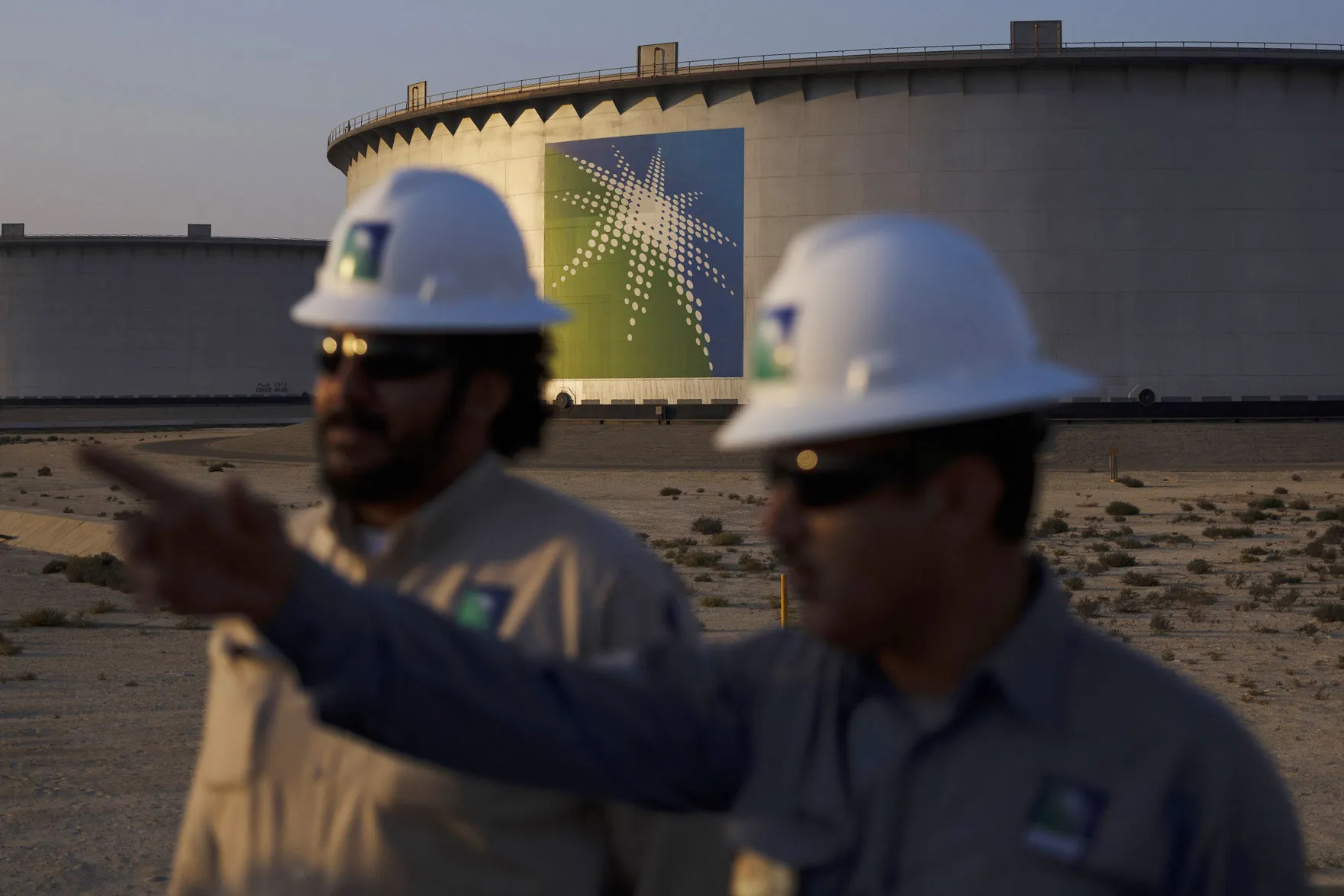
This week, Saudi Aramco cut the price of Arab Light to buyers in Asia by $11 a barrel, to $1.50 below the regional benchmark. It is the first time the kingdom has sold its flagship grade at a discount since 2020, and the largest monthly cut to its official selling prices since at least 2000. The reductions for Europe were larger still, $15 a barrel across every grade, with the US cut by $8.
The last two times Saudi Arabia discounted this grade were the price wars of 2015 and 2020. On both occasions, the oil price fell well below $50 a barrel. That is the company this decision keeps.
Saudi Arabia’s Asian oil premium swings to a discount
The easy reading
The consensus interpretation is benign. The war premium is unwinding. Brent has handed back every dollar it gained when the Strait of Hormuz was blocked, and the barrels that sat trapped in the Gulf during the conflict are now escaping. On this account, the cut is housekeeping, a producer clearing a backlog of prompt cargoes. Ahmed Mehdi at Renaissance Energy Advisors called it a function of "Hormuz's messy normalisation" rather than a price war, and said Saudi pricing simply needs to be competitive enough to pull Chinese buyers back.
I think that reading is too comfortable, because it treats the whole thing as temporary and reversible. Look at what sits underneath it. Even after an $11 cut, Asian refiners say Saudi barrels are still more expensive than crude they can buy on the spot market for immediate delivery. When the largest exporter in the world slashes its price and remains uncompetitive, that is a market carrying more oil than it knows what to do with.
The supply side is not normalising, it is fragmenting
This is the part the consensus is underweighting. OPEC is coming apart. The UAE left the group on 1 May, unwilling to keep roughly 30% of its capacity idle to defend a price it no longer believed in. Iraq, the second-largest producer in the group, is now openly threatening to follow unless it is given a bigger quota. Kazakhstan and others have long since stopped pretending to comply. The entire function of the cartel was to withhold barrels in order to hold up a price, and that discipline is the floor beneath the oil market. It is visibly cracking, and it is cracking at the same moment that production is rising almost everywhere outside the group. A cartel that is shedding members while the rest of the world pumps harder does not set a floor.
So I part from the consensus. This is not the tail end of a war premium washing out of the price. It is an early read on a structurally oversupplied market meeting a producer group that can no longer coordinate. I am becoming more confident that energy prices will surprise to the downside, both in the near term and over the next 18 months. Brent at $72 is still well above its long-run average of around $53. There is room below, and now there is a mechanism to get there.
Why this reaches beyond the oil price
The reason it matters to anyone who does not trade crude is inflation. For two years, the case for higher-for-longer rates leaned heavily on energy as the sticky, unpredictable component that kept the job unfinished. A sustained leg lower in oil pulls directly at that thread. Cheaper crude feeds through to fuel, freight, fertiliser and the input cost of nearly everything else that moves or gets made. If the direction here is right, the disinflationary force already in the system is stronger than the market is pricing, and the central banks still braced for the last war are watching the wrong chart.
The noise is a one-day headline about a Saudi price cut. The signal is a producer group coming apart while the world drowns in barrels. Those two things point the same way, and it is down.
Important information
The views expressed in this article are those of the author at the date of publication and not necessarily those of Curated Capital Ltd. The contents of this article are not intended as investment advice and will not be updated after publication unless otherwise stated.